


Among the Cedars - A Spring Encounter That Stayed With Me

It was a warm mid-spring weekend in the Okanagan Valley far warmer than seasonal temperatures should have been. The heat shimmered off the earth, creating harsh light and waves of haze that make wildlife photography difficult and uninspiring. I knew if I wanted to find spring in its truest form, I needed to leave the valley behind and head for the mountains, where winter still lingered in the shadows and the awakening of the wild had only just begun.
With hopes of finding a grizzly, or perhaps a black bear sow with cubs emerging from their den, I pointed my truck toward the Selkirk Mountains.
After several hours of driving and a short ferry ride across Upper Arrow Lake, the pavement finally disappeared beneath my tires and gave way to gravel. The moment the rubber hit the dirt road, I felt myself exhale. I was home in the mountains.
Almost instantly, a bald eagle swept low across the road ahead of me before circling above my truck, as if welcoming me into the wilderness and into whatever story the mountains had waiting.
I drove slowly through towering cedar forests, past avalanche chutes still streaked with snow, down into river valleys where spring runoff thundered through the bends below. The windows stayed down so I could breathe the cold mountain air and listen to the forest around me. Wildlife photography has never been about rushing from one sighting to another for me. The beauty is in the anticipation, the wondering of what might be waiting around the next corner.
For hours, I watched waterfowl drift along the river and studied fresh bear tracks pressed into the muddy roadside. But as the afternoon stretched on, I began to think my search might come up empty. Eventually, I decided it was time to turn around and start the long 5 hour drive home.
Not long after, I crossed paths with a convoy of spring bear hunters heading into the very country I was leaving behind.
As I made my way back down the forest service road, my eyes suddenly caught movement ahead, a black bear sow stepping out along the roadside grass.
My heart skipped.
My first bear of 2026.
I slowly crept my truck forward to within roughly fifty yards and stopped. The sow calmly fed on the fresh spring greens, unbothered by my presence. Then suddenly, from the trees beside my driver’s window, came an abrupt squealing growl.
I turned and froze in my seat.
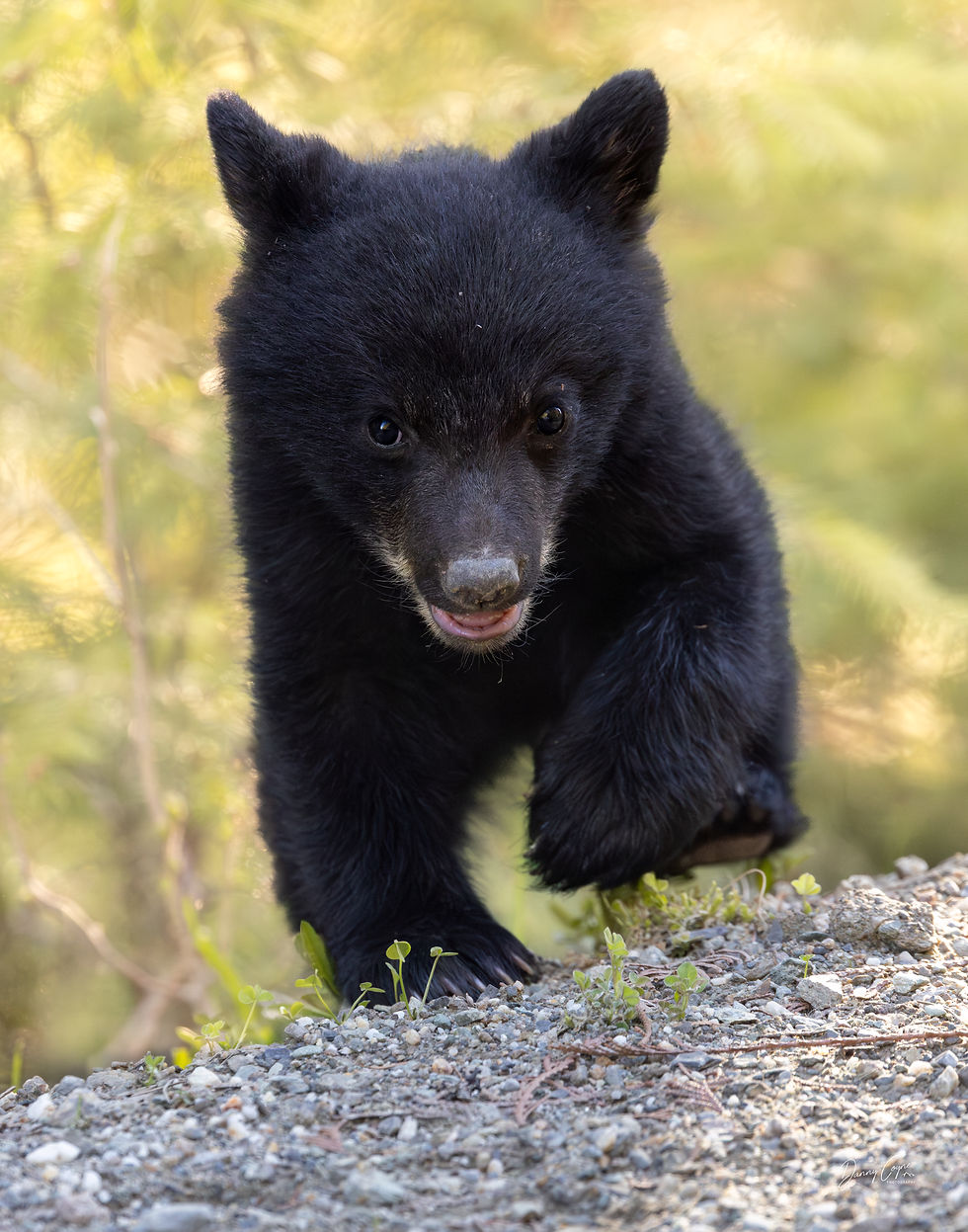
Perched on a branch only yards away was a tiny black bear cub, staring at me with wide-eyed curiosity while calling for its mother.
I instinctively lifted my camera and snapped a quick photo before immediately reversing my truck down the road to give them space.
The sow clearly knew I was there, but her focus remained on feeding. I had a feeling that if I stayed patient and quiet, the cub would eventually feel comfortable enough to come down. About fifteen minutes later, the little cub climbed down from the tree. Then, to my complete surprise, a second cub emerged from the forest.
Suddenly the roadside came alive with youthful chaos and curiosity. The cubs wrestled, stumbled, climbed, and chased each other through the ditch while their mother calmly grazed nearby. Watching them felt like witnessing pure innocence in its wildest form. I couldn’t help but laugh quietly to myself as they explored the world with the same carefree wonder every living thing seems to possess when it is young.

For a moment, nothing else existed except that small family and the mountains around us.
Eventually, the sow and her cubs slowly approached my truck. I stayed perfectly still, speaking only through the quiet clicks of adjusting my camera. The cubs became comfortable enough to wander right past me, completely absorbed in their little adventures. One of them even climbed onto my rear tire, treating it like a jungle gym built just for her.
It was impossible not to smile.
But even in that beautiful moment, I reminded myself of something every wildlife photographer should understand about our role is to observe without changing the behaviour of the animal. The best photographs come when the wildlife remains truly wild.
A good rule in ethical wildlife photography is simple. Capture the moment without disturbing it, then leave before doing so.

As I finally pulled away from the bears, my excitement slowly gave way to a knot in my stomach. I thought back to the convoy of hunters I had passed earlier.
When I first saw that sow, she appeared completely alone. Had that cub not squealed from the tree beside me, I never would have known she had young nearby. The cubs had stayed hidden and separated from her for protection which is exactly what young bears instinctively do.
And that thought has stayed with me ever since.
Because somewhere behind me on that mountain road were hunters entering the same valley, and I couldn’t stop wondering if those cubs climbed another tree out of sight, would someone mistake that sow for a lone bear?
This is where conversations around spring bear hunting become deeply important. I’m not writing this to argue politics or attack hunting itself. Ethical hunters who respect wildlife and the land play an important role in conservation. But what I am advocating for is diligence, patience, and responsibility.
No animal should ever be harvested unless the hunter is absolutely certain it is alone.
A sow with cubs may not always appear with them beside her. Cubs can remain hidden, climb trees, or stay back in thick cover while their mother feeds nearby. If a hunter fails to properly identify that situation, the consequences are devastating. Those cubs are left orphaned, confused, and often unable to survive on their own.
As wildlife photographers, we often tell stories for animals that cannot speak for themselves. That day, those little cubs left an imprint on me far beyond photographs. I drove home with images I’ll treasure forever, but also with a deep responsibility to share their story.
I believe conservation begins with empathy. Sometimes all it takes is one quiet moment in the mountains, one curious cub staring down from a tree to remind us that every decision we make in the wild carries weight far beyond ourselves.

